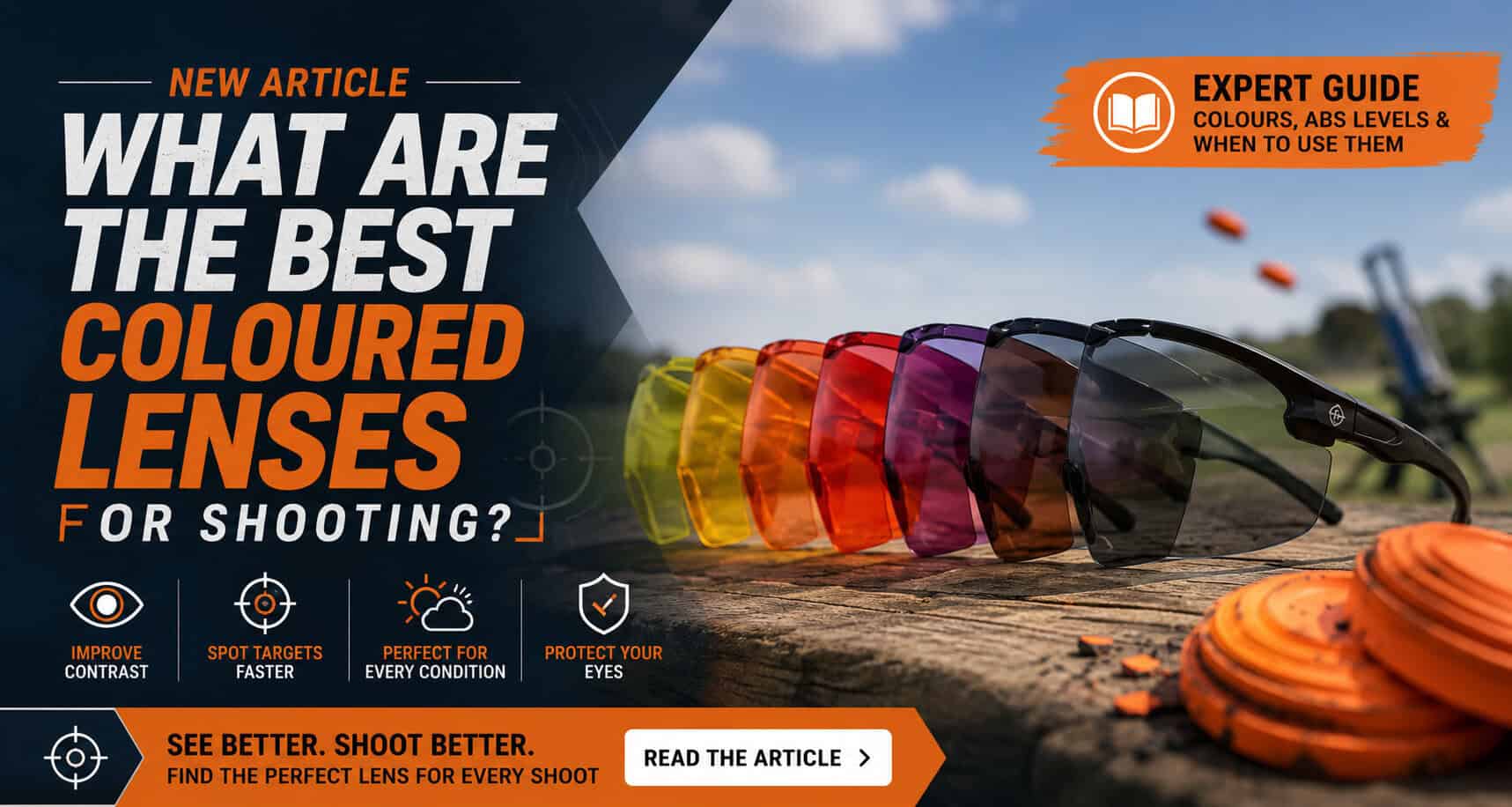
What Are the Best Coloured Lenses for Shooting?
Finding the best coloured lenses for shooting can make a noticeable difference to target visibility, contrast and visual comfort. Whether you enjoy clay pigeon shooting, competitive target shooting or spending time at an outdoor shooting range, selecting the right lens tint helps you distinguish targets against different backgrounds.
There is no single best colour for every situation. Purple and vermilion lenses are popular for clay shooting, yellow and amber lenses can help in overcast conditions, while grey lenses are useful in bright sunlight. For many participants, choosing the best coloured lenses for shooting involves investing in specialized glasses with multiple interchangeable tints.
In this guide, we explore the most popular coloured shooting lenses, their advantages and disadvantages, and which options are worth considering.
1. Purple Lenses: Best for Orange Clays Against Green Backgrounds
Purple shooting lenses are a popular choice among clay pigeon shooters, particularly when targets cross in front of trees, hedges and green foliage.
The tint can reduce the visual dominance of green and blue backgrounds, helping orange clays stand out more clearly.
Pros
-
Excellent potential contrast against green foliage.
-
Popular for sporting clays and woodland layouts.
-
Useful when shooting against busy natural backgrounds.
Cons
-
Performance varies with the exact tint and lighting.
-
May be less suitable for some target colours and backgrounds.
Verdict: Purple lenses are an excellent option to try if you regularly shoot orange clays against green trees and vegetation.
2. Vermilion and Rose Lenses: Best All-Round Options for Clay Shooting
Vermilion and rose lenses are among the most popular choices for clay target shooting. These reddish or pinkish tints can enhance the separation between orange targets and surrounding scenery.
They are particularly worth considering for sporting clays, skeet and trap shooting, where quickly identifying a moving target is essential.
Pros
-
Can improve orange-clay contrast against foliage and sky.
-
Available in a variety of specialist shooting glasses.
-
Useful for shooters who want a dedicated contrast-enhancing lens.
Cons
-
Colour perception changes depending on the lens.
-
The ideal tint depends on the target colour and prevailing light.
Verdict: If you mainly shoot orange clays, vermilion or rose is a strong starting point. Try both if possible before choosing a favourite.
3. Yellow Lenses: Best for Dull and Overcast Conditions
Yellow shooting lenses are often selected for flat, grey weather and lower-light environments. By filtering parts of the visible spectrum, they can make some edges and targets appear more distinct.
However, yellow lenses do not create additional light. Their effect depends on the lens transmission, target and surrounding conditions.
Pros
-
Can improve perceived contrast in dull conditions.
-
Useful for some outdoor and indoor shooting environments.
-
A good option to compare with clear lenses in low light.
Cons
-
Can distort natural colours.
-
Darker yellow tints may reduce the light reaching your eyes.
Verdict: Yellow lenses are worth considering for overcast days, but choose a sufficiently light tint and avoid using them when they make visibility worse.
4. Amber and Brown Lenses: Best for Variable Outdoor Conditions
Amber and brown shooting lenses offer a balance between contrast enhancement and managing bright conditions. They are popular with shooters who regularly move between open ground and backgrounds containing grass or trees.
Depending on the tint, these lenses can help targets remain distinguishable without the strong colour shift associated with some specialist lenses.
Pros
-
Useful for many outdoor lighting conditions.
-
Can enhance contrast against natural backgrounds.
-
Available in different darkness levels.
Cons
-
Darker versions may be unsuitable in poor light.
-
Not every amber or brown lens performs identically.
Verdict: Amber is a practical option for changing weather, while brown can be particularly comfortable in brighter outdoor conditions.
5. Grey or Smoke Lenses: Best for Bright Sunshine
Grey or smoke lenses are designed primarily to reduce the amount of light reaching the eyes while keeping colours relatively natural. They can be particularly useful on bright summer days when glare and squinting become distracting.
Unlike specialist contrast tints, grey lenses are not necessarily the best choice for making orange clays stand out against every background.
Pros
-
Helps manage brightness in strong sunlight.
-
Generally preserves colour balance better than strongly coloured tints.
-
Useful for outdoor shooting in bright conditions.
Cons
-
Dark lenses can make targets harder to see in overcast weather.
-
Less specialised for enhancing orange-clay contrast.
Verdict: Grey or smoke lenses are a sensible addition to a shooting glasses collection if you frequently shoot in bright sunshine.
Best Shooting Lens Colours at a Glance
These are general guidelines rather than guarantees. Actual performance depends on lens darkness, light transmission, target colour and the background.
What Should You Look for in Shooting Glasses?
Colour is only one part of finding the best coloured lenses for shooting. Eye protection, fit and optical quality should always come first.
Impact protection
Choose purpose-made shooting glasses with documented impact protection appropriate to your shooting discipline. Check the manufacturer’s certification and confirm that the specific frame and lens combination meets the relevant requirements.
Interchangeable lenses
An interchangeable lens system is particularly useful for clay shooting. A kit containing clear, yellow, or amber lenses and a suitable contrast tint gives you more flexibility when weather and backgrounds change.
Anti-fog performance
Fogging can interrupt your view and become distracting during a shooting session. Look for suitable anti-fog coatings, ventilation and a comfortable fit.
Comfort and field of view
Shooting glasses should sit securely without obstructing your view or interfering with ear defenders. A comfortable frame is especially important during long competitions or extended sessions.
Prescription compatibility
If you wear prescription glasses, consider shooting-specific prescription lenses or a compatible prescription insert rather than relying on an uncomfortable fit over everyday spectacles.
Final Verdict: Which Coloured Lenses Are Best for Shooting?
For most clay pigeon shooters, vermilion or rose lenses are an excellent starting point, particularly when orange targets need to stand out against green foliage or mixed backgrounds. Purple lenses are also worth trying for woodland layouts.
When determining the best coloured lenses for shooting in varied British weather, investing in a quality interchangeable kit is often the most practical choice. Combine a contrast-enhancing tint with clear lenses for low-light conditions and grey or smoke lenses for bright sunshine.
Above all, choose lenses that suit your eyes, your shooting environment and the targets you regularly encounter. Coloured lenses can improve contrast, but they should never be a substitute for suitable impact-rated eye protection.
Frequently Asked Questions
What colour lenses are best for clay pigeon shooting?
Vermilion, rose and purple are popular choices for improving orange-clay visibility. The best option depends on the background, lighting and your personal visual preferences.
Are yellow lenses good for shooting?
Yellow lenses can help some targets appear more distinct in dull or overcast conditions. Their effectiveness depends on lens darkness and available light.
Are purple lenses better than orange lenses for shooting?
Neither is universally better. Purple can work well against green foliage, while vermilion or orange-family tints can enhance the appearance of orange clays in suitable conditions.
Can you use coloured shooting glasses indoors?
Yes, provided the lens is suitable for the available light and the shooting environment. Clear lenses are often the better starting point for dim indoor ranges.
Should shooting glasses have interchangeable lenses?
Interchangeable lenses are useful if you shoot in different weather conditions or against a variety of backgrounds. They let you select a more appropriate tint without purchasing several complete pairs of glasses.
Lens Colour
|
Best Suited To
|
Main Benefit
|
Purple
|
Orange clays against green foliage
|
Background separation
|
Vermilion
|
Clay pigeon shooting
|
Orange-target contrast
|
Rose
|
Clays and mixed backgrounds
|
Contrast enhancement
|
Yellow
|
Dull, overcast conditions
|
Perceived contrast
|
Amber
|
Variable outdoor light
|
Contrast and versatility
|
Brown
|
Brighter outdoor conditions
|
Contrast and visual comfort
|
Grey or Smoke
|
Bright sunshine
|
Brightness and glare management
|
Clear
|
Indoor ranges and low light
|
Maximum available light transmission
|