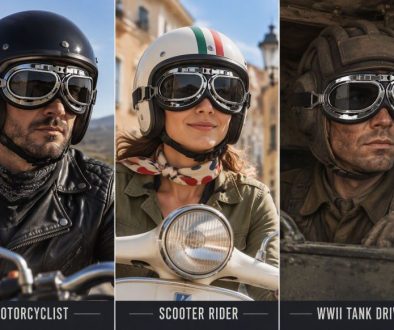

WWII and 1960s Protective Eyewear
Eye protection underwent a massive evolution from the battlefields of the Second World War to the counterculture pop-culture boom of the 1960s. During World War II, military goggles became essential standard-issue gear. Designed for personnel ranging from dispatch riders and tank commanders to fighter pilots and paratroopers, these pieces prioritized raw survival and utility. Iconic models like the US Army M-1944 combat goggles featured robust rubber frames, ventilation ports to prevent fogging, and interchangeable clear, green, or amber polycarbonate lenses. They were engineered to block blinding dust, wind, shrapnel, and glare in brutal environments across Europe and the Pacific.
By the 1960s, heavy-duty military aesthetics transitioned into civilian utility and fashion statements. The era’s booming motorcycle culture, pop art movements, and space-race optimism heavily influenced design. Classic 1960s goggles—often associated with café racers, mod subcultures, and vintage ski slopes—reimagined wartime pragmatism into sleek, stylish accessories. Manufacturers replaced drab military olive drabs with chrome-plated frames, padded leather trims, and tinted spherical lenses.
Despite their different origins, both eras shared a common design philosophy: combining high-performance durability with face-hugging comfort. Whether deployed across the muddy front lines of 1944 or cruising down a neon-lit urban highway in 1965, these vintage goggles remain enduring symbols of functional design. Today, original military surplus and classic 1960s retro eyewear are highly sought-after collector’s items, celebrated by aviation enthusiasts, motorcycle riders, and vintage fashion aficionados alike for their timeless, rugged appeal.
For that true vintage look
-
Robust Protective Frames:
-
Secure Elastic Headbands: Equipped with heavy-duty, adjustable elastic straps to ensure a snug, non-slip fit.
-
Face-Hugging Ergonomics: Contoured to match facial geometry seamlessly, blocking windblasts for dispatch riders, aviators, tank crews, and paratroopers while maintaining long-wear comfort.