
A review of the very latest ski goggles and prescription lens options
The biggest changes in ski goggles right now are focused on adaptive vision, faster lens changes, anti-fog performance, and smart technology.
1. Photochromic lenses are becoming mainstream
Many premium goggles now use lenses that automatically darken or lighten as conditions change, reducing the need to carry multiple lenses. Newer versions offer wider light-transmission ranges and faster transitions in cold conditions. [where-to-ski.com], [cleverskier.com]
2. Magnetic lens systems are now the standard
Quick-change magnetic lenses have moved from a premium feature to an expected one. Riders can swap from a sunny lens to a storm lens in seconds, even while wearing gloves. Brands such as Smith, Anon, and Oakley continue to refine these systems.
3. Improved contrast-enhancing optics
Lens technologies such as ChromaPop, Prizm, and other contrast-boosting systems are designed to make terrain features, bumps, and ice patches easier to see in flat light. This remains one of the strongest selling points in high-end goggles.
4. Anti-fog technology has taken a big step forward
Manufacturers are combining:
- Advanced venting
- Dual-pane thermal lenses
- Better moisture-wicking foams
- Improved helmet integration
The goal is to eliminate pressure fogging and maintain airflow in difficult conditions.
5. Smart and AR goggles are emerging
The most innovative area is AR (Augmented Reality) ski goggles. New systems can display:
- Speed
- Navigation
- GPS location
- Vertical descent
- Notifications
- Potential safety information
Brands and start
6. Bigger fields of view
Modern frameless, toric, and oversized spherical designs continue to expand peripheral vision. Many of the latest goggles are designed to feel almost invisible when worn.
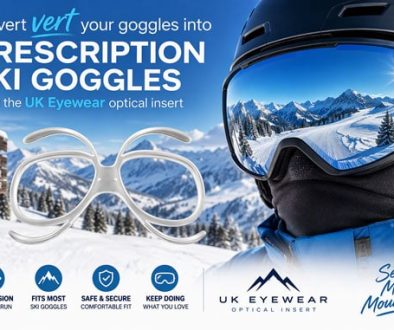
7. Better OTG and prescription compatibility
There is growing demand for prescription solutions. More brands are designing goggles with:
- Larger OTG (Over The Glasses) cavities
- Better ventilation around inserts
- Seamless integration with prescription inserts
This is especially relevant for the sports eyewear market. [skimag.com], [cleverskier.com]
What I’d watch for in 2026-27
For someone in the ski eyewear industry, the strongest trends are:
✅ Adaptive photochromic lenses
✅ Premium contrast-enhancing optics
✅ Magnetic lens systems
✅ Prescription insert compatibility
✅ AR/smart goggle integration
✅ Improved anti-fog airflow design
✅ Sustainability through bio-based frames and recycled straps (appearing across several new collections)
The prescription insert category is particularly interesting because it’s one of the fastest-growing areas where mainstream goggle brands still have relatively limited integrated solutions, creating opportunities for specialist eyewear companies.